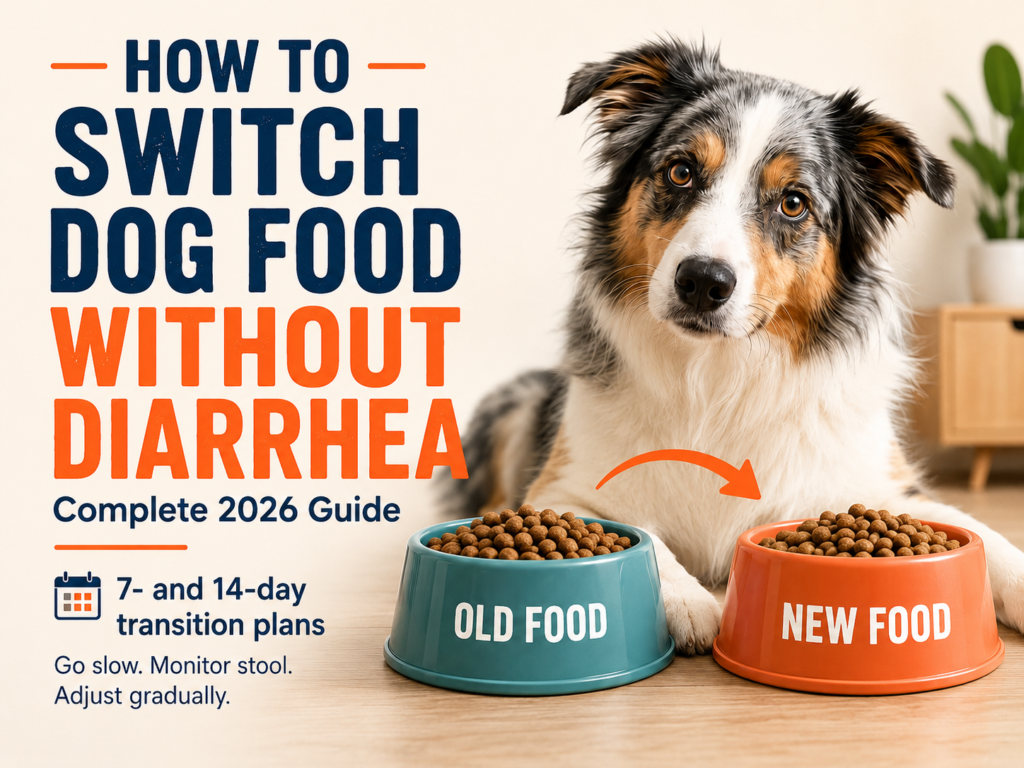
How to switch dog food without diarrhea usually comes down to one factor: how quickly you introduce the new diet. An abrupt change can trigger loose stool, vomiting, gas, or reduced appetite, even when the new food is appropriate for your dog. A gradual transition gives your dog time to adjust while helping you identify problems early.
This guide provides standard and sensitive-stomach schedules, portion examples, a stool-based decision chart, and practical steps for switching when the old food is unavailable.
How to Transition Dog Food Safely: Quick Answer
Most healthy adult dogs can transition to a new food over approximately seven days. Begin with 25% new food and 75% old food. Gradually increase the new food while reducing the old food until your dog eats only the new diet.
Dogs with sensitive stomachs may need 10–14 days or longer. Move to the next ratio only when your dog’s stool, appetite, and energy remain normal. Sudden dietary changes are more likely to cause gastrointestinal upset, including diarrhea, vomiting, and appetite loss.
Why Dogs Get Diarrhea When You Switch Food
Changing dog food can introduce a different protein source, fat level, fiber type, moisture content, calorie density, and texture. Your dog’s digestive system may need time to adjust to those differences.
Loose stool during a transition doesn’t always mean the new food is unsuitable. It may indicate that you increased the new food too quickly or served too much because the two foods have different calorie densities.
Diarrhea can also have unrelated causes, including stress, parasites, infection, table scraps, new treats, or an underlying health condition. That’s why you should monitor your dog’s overall condition rather than judging the new diet from one bowel movement.
The 7-Day Dog Food Transition Chart
This common seven-day schedule is suitable for many healthy adult dogs without known digestive sensitivities. AKC recommends changing food gradually over five to seven days, while AAHA advises that diet adjustments over four to seven days may reduce negative gastrointestinal responses. Hold each stage for two full days before increasing the new food.
| Days | Old Food | New Food |
| Days 1–2 | 75% | 25% |
| Days 3–4 | 50% | 50% |
| Days 5–6 | 25% | 75% |
| Day 7 onward | 0% | 100% |
When your dog’s stool remains formed and normal, continue to the next ratio. If the stool becomes softer, stay at the current stage for another day or two.
Dog Food Transition Chart for Sensitive Stomachs
Dogs with a history of food sensitivities often benefit from a smaller starting amount and a slower schedule. AKC recommends beginning with approximately 10%–20% new food for sensitive dogs and adjusting gradually.
| Days | Old Food | New Food |
| Days 1–3 | 90% | 10% |
| Days 4–6 | 75% | 25% |
| Days 7–9 | 50% | 50% |
| Days 10–12 | 25% | 75% |
| Days 13–14 | 10% | 90% |
| Day 15 onward | 0% | 100% |
Extend a stage when your dog develops mildly soft stool, increased gas, reduced appetite, or more frequent bowel movements. Your dog’s response should determine the pace—not the date on the calendar.
Puppies, senior dogs, and dogs with medical conditions may need an individualized plan from their veterinarian.
Portion Examples Using Cups
Suppose your dog normally eats two cups daily. Using the standard schedule, the portions would look like this:
| Transition Ratio | Old Food | New Food |
| 75% old and 25% new | 1.5 cups | 0.5 cup |
| 50% old and 50% new | 1 cup | 1 cup |
| 25% old and 75% new | 0.5 cup | 1.5 cups |
| 100% new | 0 cups | 2 cups |
These examples work best when the foods contain similar calories per cup. If the new food has a significantly different calorie density, don’t automatically replace it cup for cup.
Compare the calories listed on both packages or follow the manufacturer’s feeding directions. The new food should replace part of the old portion rather than being added on top, since accidental overfeeding can also contribute to digestive upset.
Stool-Based Decision Matrix
Use your dog’s stool and overall behavior to decide whether to continue, hold, reverse, or contact your veterinarian.
| What You Observe | Recommended Action |
| Firm, well-formed stool | Continue to the next ratio |
| One slightly soft stool | Hold the current ratio for 1–2 more days |
| Repeated loose stools | Return to the last tolerated ratio and monitor |
| Watery or frequent diarrhea | Stop increasing the new food and contact your veterinarian |
| Persistent mucus | Hold the transition and ask your veterinarian if it continues |
| Blood, black stool, repeated vomiting, weakness, pain, or dehydration | Seek prompt veterinary guidance |
Dog Diarrhea After Changing Food: What Should You Do?
One mildly soft stool doesn’t necessarily mean you must abandon the new food. Hold the current ratio and remove other new items, including treats, toppers, chews, and table scraps.
If loose stools continue, return to the last ratio your dog tolerated. Maintain that stage until the stool becomes normal before attempting another gradual increase.
Avoid switching immediately to a third food. Repeated diet changes can make it harder to determine whether the problem comes from transition speed, portion size, a specific ingredient, or another health issue.
Do not give your dog human anti-diarrhea medicine unless your veterinarian specifically recommends it.
Changing Dog Food Too Quickly: Signs and Recovery
Changing dog food too quickly may cause:
• Loose or watery stool
• Gas or abdominal discomfort
• Vomiting
• Reduced appetite
• More frequent bowel movements
• Sudden reluctance to eat
Slowing the transition may help when the dietary change happened too quickly. However, persistent or worsening symptoms may indicate that the new food is unsuitable or that another medical issue is involved.
Monitor more than stool quality. Changes in thirst, energy, appetite, behavior, and vomiting can provide important clues about your dog’s condition.
How Long Does Diarrhea Last After Changing Dog Food?
Mild loose stool may improve after you pause or slow the transition. Contact your veterinarian when diarrhea is frequent, severe, worsening, or continues for about two days without improvement.
Seek veterinary help sooner when diarrhea occurs with blood or black stool, repeated vomiting, lethargy, pain, dehydration, or loss of appetite. Puppies, senior dogs, very small dogs, and dogs with existing medical conditions may require earlier assessment.
Switching Dog Food Cold Turkey: Is It Ever Necessary?
A gradual transition is preferable, but an immediate change may be unavoidable when:
• The previous food has been recalled
• Contamination is suspected
• The formula has been discontinued
• You have adopted a dog with an unknown previous diet
• Your veterinarian has prescribed an immediate dietary change
• The previous food appears to trigger a serious reaction
Do not continue feeding recalled or potentially contaminated food simply to complete a gradual transition. Follow the manufacturer’s recall instructions and contact your veterinarian about the safest replacement.
How to Switch Dog Food Without Old Food
When the old food is unavailable, ask your veterinarian or the manufacturer which available recipe most closely resembles the previous diet.
Compare:
• Primary protein source
• Fat and fiber levels
• Calories per cup or serving
• Dry, wet, or fresh format
• Life-stage suitability
• Feeding directions
Keep meals measured and consistent. Avoid introducing new treats, toppers, supplements, or homemade meals during the change unless your veterinarian recommends them. Adding several new ingredients at once makes it harder to identify the cause if digestive symptoms develop.
Comparing Kibble, Wet, Fresh, Raw, and Prescription Food
Different formats can vary considerably in moisture, calorie density, fat, fiber, protein, and texture.
| Food Change | What to Check |
| Kibble to kibble | Protein, fat, fiber, calories per cup, and kibble size |
| Kibble to wet | Calories per can or pouch and higher moisture content |
| Wet to kibble | Calories per cup, texture, portion size, and water intake |
| Kibble to fresh | Calories per ounce, moisture, refrigeration, and serving directions |
| Same brand, new flavor | Protein source, fat, fiber, and recipe differences |
| Puppy to adult food | Appropriate timing for your dog’s age, size, and development |
| Regular to prescription food | Follow your veterinarian’s specific instructions |
Equal portions by volume may not provide equal calories. Measure according to the new product’s calorie content and feeding guide.
Raw-food safety note: Raw pet food involves additional sanitation and foodborne-pathogen risks. The FDA reports that raw pet food is more likely than processed food to contain harmful bacteria and recommends careful handwashing and cleaning of bowls, utensils, and preparation surfaces. Discuss raw feeding and safe handling with your veterinarian before switching.
Printable Dog Food Transition Tracker
Use this tracker to identify the last ratio your dog tolerated and document symptoms clearly.
| Date | Day | Old/New Ratio | Amount Fed | Stool Quality | Appetite | Vomiting or Gas | Energy | Notes |
Download or print this free dog food transition tracker and update it once daily. Bring the completed record to your veterinary appointment if symptoms persist.
When to Contact a Veterinarian
Contact your veterinarian when your dog has:
• Frequent or severe watery diarrhea
• Blood or black, tarry stool
• Repeated vomiting
• Weakness or unusual lethargy
• Abdominal pain
• Signs of dehydration
• Refusal to eat or drink
• Symptoms that worsen or fail to improve
Seek advice earlier for puppies, senior dogs, very small dogs, pregnant dogs, or dogs with chronic health conditions. Veterinary sources recommend prompt evaluation when diarrhea occurs with vomiting, blood, appetite loss, lethargy, or discomfort.
This guide provides general educational information and does not replace advice from your veterinarian.
Conclusion
A gradual dog food transition gives your dog’s digestive system time to adjust and helps you identify problems before they become severe. Begin with a small amount of new food, measure each portion, and monitor stool quality before advancing to the next ratio.
Hold or reverse the schedule when digestive upset appears, and contact your veterinarian when symptoms become severe or persistent.
When transitioning to Jinx, follow the feeding directions for your chosen recipe and hold the current ratio whenever your dog’s stool becomes softer than usual.
FAQs
Q1: Can I switch my dog’s food without mixing it?
You can, but an abrupt switch is more likely to cause gastrointestinal upset. Gradual mixing over approximately seven days is safer for most healthy dogs, while sensitive dogs may need a longer transition.
Q2: What should I do if I already switched my dog’s food too fast?
Return to the last ratio your dog tolerated, remove other new foods, and monitor stool, appetite, energy, and vomiting. Contact your veterinarian if symptoms become severe, worsen, or fail to improve.
Q3: Do I need to transition between flavors from the same brand?
A gradual transition is still advisable when the recipes use different proteins, fats, fiber sources, or calorie levels. Dogs with sensitive stomachs may need the same slow schedule used when switching brands.
Q4: What can I feed my dog if I run out of the old food?
Ask your veterinarian or the manufacturer for an appropriate replacement that closely matches the former diet. Avoid using an improvised homemade meal unless your veterinarian has recommended it for your individual dog.
Q5: Should I stop the new food if my dog gets diarrhea?
Not necessarily after one mildly soft stool. Hold the current ratio or return to the last tolerated stage. Contact your veterinarian if the diarrhea becomes frequent, watery, bloody, severe, or occurs with vomiting, weakness, pain, or dehydration
Disclaimer: This article is for general informational and educational purposes only and is not a substitute for professional veterinary advice, diagnosis, or treatment. Always consult a licensed veterinarian before changing your dog’s diet, especially if your dog has persistent diarrhea, vomiting, allergies, a medical condition, or other concerning symptoms.
Leave a Reply